
How to change a tyre (& help prevent it from happening again!)

There is never a good time for a flat tyre, yet it always seems to happen when you're already late, halfway through the school run or just as the rain starts to pour. It can feel a bit overwhelming in the moment, but once you know the basics, it's far more manageable than you might think.
A few simple steps and a bit of prep can get you safely back on your way in no time.
Safety First
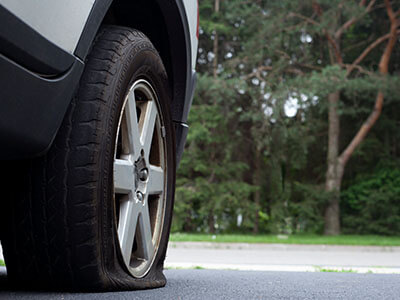
Before doing anything to fix a flat tyre, your priority should always be getting yourself somewhere safe. If you notice a tyre has gone flat, switch your hazard lights on straight away, slow down gently and look for a safe place to pull over. It’s always better to keep moving a little further and stop somewhere safer, rather than pulling over quickly in a more dangerous spot. Once you’ve stopped, make sure everyone gets out of the car and moves to a safe location, and only attempt to change the tyre if it’s safe to do so.
The Highway Code advises against changing a tyre on the hard shoulder of a motorway because of the danger from passing traffic. If possible, you should leave the motorway and stop at a safer location before attempting to change a tyre.
If you’re feeling unsure about changing a tyre, it’s best to call for professional help rather than risk your safety. You can check your policy online to see if you have breakdown cover, which we provide in partnership with the RAC.
How to change a tyre: step-by-step
Changing a tyre can be a stressful situation at the best of times. So that you're prepared if the situation should ever arise, here is an easy-to-follow, step-by-step essentials guide to changing your tyre:
1. Get everything ready
Once everyone is out of the car and you are parked in a safe place with the handbrake on, you will need your spare wheel, jack, wheel wrench and nut key (if locking nuts are fitted). These things will usually be stored underneath the floor panel in your boot, with the jack and wrench frequently stored inside the rim of the spare wheel.
2. Stop the car rolling
Place something sturdy behind the tyre opposite the one that needs to be changed, a brick or a wheel chock would work, just anything to stop the car rolling in case the handbrake fails.
3. Loosen the wheel nuts
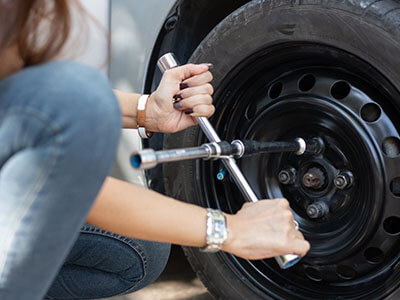
Do this before you lift the car: turn the wheel nuts anti-clockwise, but don't remove them fully. You just need to loosen them.
4. Jack the car up
Position the jack on the reinforced metal frame located just behind the front wheels or just in front of the rear wheels. This varies from car to car; if you check your car manual, you will be able to find how to position the jack. Once the jack is in position, lift until the tyre is just off the ground (10-15cm is ideal).
5. Remove the flat tyre
Now the tyre is fully off the ground, and the wheel nuts are loose. Take off the loosened nuts and gently pull the wheel away to remove and place somewhere out of the way.
6. Fit the spare
Line up the spare wheel with the car and slide it into position, screw the nuts back on loosely by hand to get the spare in the right position.
7. Lower and tighten
Lower the car so the new spare tyre touches the ground. Once the tyre is lowered, tighten the nuts properly using the wrench. Once finished, remove the jack from the car and give the nuts one final check.
8. Check the pressure
Once the new tyre is fitted and the car is lowered, if you can, check the spare tyre is properly inflated before driving off.
9. Get it sorted properly
Fitting a spare tyre is a great short-term fix, but it's not a long-term solution. As soon as you can, head to a garage as soon as possible to have your remaining tyres checked and to ensure the car is safe to be driven.
Source: The RAC
Easy ways to avoid a flat tyre in the first place
Sometimes inconveniences like a flat tyre are unavoidable, and they are bound to happen sooner or later. However, if you want to minimise your risk of a flat tyre, below are some easy tyre maintenance tips that go a long way for your car.
-
Check your tyre pressure monthly
Checking your tyre pressure is one of the simplest things you can do to stay on top of your tyre maintenance. Low tyre pressure affects grip, handling and fuel use and can also lead to a blowout.
-
Keep an eye out for damage
Every so often, just keep an eye out for any new cuts, cracks, or bulges on the tyres. Check the tyre for any uneven wear and tear, as even small issues can turn into bigger ones if they are ignored. Watch out for nails or debris on the road, and avoid them if possible and safe to do so
-
Know your tread
If your tyres are looking worn, it's time to get some new tyres. Good tread means better grip on the road, which is crucial in difficult weather conditions like rain or snow. Tyres should typically be replaced every 20,000 to 40,000 miles (roughly 3-5 years) or sooner if the tread depth reaches the 1.6mm legal limit, though 3mm is recommended for safety.
A simple way to check this is with the 20p test! Place the coin into the grooves and if the outer band is hidden, your tread is legal. If it’s visible, your tyres may be unsafe and should be checked.
You might also be interested in
Can a dash cam help with a claim?
Why you might want to consider one, and what types are available
Pothole peril
What is it about these hideous hazards that you should be aware of, apart from the need to avoid them?