
Extending vs Moving: Should You Stay Put or Sell Up?

If your home is starting to feel a little… snug, you’re not alone. Life has a habit of changing faster than our homes do, and as families grow, working patterns shift, suddenly the space that once felt perfect feels tight.
For many homeowners, this eventually leads to crossroads: do you adapt the home you’re in, or is it time for a fresh start somewhere new?
At the same time, homes aren’t just bricks and mortar. You might love your neighbours, depend on nearby schools, or feel settled into routines that are hard to walk away from. It’s a big decision, and it can feel overwhelming, but taking time to explore both options properly can make the choice feel much easier to navigate.
The case for extending your home
For many homeowners, extending your home feels like the most natural step.
More space without saying goodbye
An extension lets you gain the space you need while staying in the area you already know and love. There’s no need to change schools, commute routes or local routines, and no emotional reset required. While building work can be disruptive, it often feels more manageable than packing up your entire life and starting again.
Is an extension more cost-effective than moving?
On paper, extending can look cheaper than moving; you avoid stamp duty, estate agent fees, solicitor costs and removal vans, all of which add up quickly. That said, it’s important to budget realistically. Build costs, planning fees and unexpected extras can creep in, so having a clear contingency fund in place is important.
Will an extension add value to your home?
Nationwide’s research has shown a house extension can increase your home’s value. The value added can vary depending on the type of improvement, with an extra bathroom increasing value by around 4% and larger projects such as extensions or loft conversion adding as much as 24%, exact figures will depend on the work carried out, including things such as the size of the extension, quality of the workmanship and location. However, it's important to note that every street will have a cap on how high property values are likely to reach.
The case for moving home
For others, moving house feels like the right choice.
A fresh start can be tempting
Moving gives you the chance to upsize, downsize or change direction entirely. You might find a layout that works better without compromise or choose a different location that suits your lifestyle now. There’s also something appealing about a blank slate which doesn’t require the inconvenience of months upon months of building works.
The true cost of moving
Beyond the asking price, moving comes with additional costs: stamp duty, surveys, legal fees and removals which can quickly stretch budgets. In fact, Comparemymove indicate that the average cost of moving house in 2026 is £15,108, and this only takes into account the essential services required (this includes average fees in relation to the cost of buying a home, selling a home and general costs for moving. Based on the average UK property price of £292,00, whilst excluding house deposits and costs relating to individual circumstances).
Could moving be the better long-term investment?
Sometimes, buying the ‘right’ house makes more sense than adapting your current one. If your needs are likely to change again in a few years, moving could be the more future-proof option.
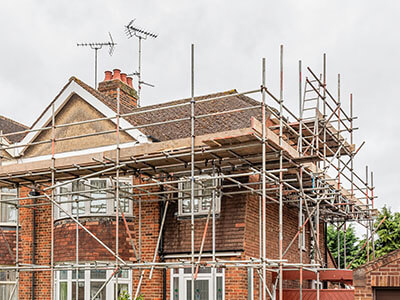
Extend or move: which makes financial sense?
When comparing the two, it helps to look beyond headline costs.
Extensions often involve months of disruption but allow you to spread costs over time. Moving can be quicker once complete but usually demands a larger upfront spend.
It’s also worth weighing up lifestyle benefits against resale value. The best decision isn’t always the one that maximises profit, it’s the one that keeps half an eye on the future, while improving how you live day to day.
If you choose to renovate, here’s what you need to tell us…
If you decide an extension or renovation is the right path, keeping your insurer informed is important. We need to know about any major changes, including anything structural such as:
- Extensions
- Loft conversions
- Knocking through rooms or removing structural walls
- Re-wiring Roof replacement
These details help ensure your cover remains appropriate while work is underway. It’s also important to share:
- How long the work is expected to take
- The cost of the entire project
- Whether you’ll be living in the property during the renovation, the unoccupancy clause begins after 30 days
What does ‘unoccupancy' mean?
At Sheilas’ Wheels we would consider your home unoccupied if no one from the household lives there for more than 30 days. If this happens, your cover is reduced, you’ll still be protected for major risks like fire or storm, but some everyday cover (such as garden contents, glass and sanitary ware, or freezer contents) pauses until someone from the household is living in the home again. Please check your policy for restrictions during building work.
Understanding your cover during renovations
While work is being carried out, liability usually lies with the builder, not you. Using experienced contractors with the right public liability insurance in place is crucial, as it protects your home, the people working on it, and you as the homeowner. Please check that your contractor has this in place.
Stay put or sell up: making the choice that’s right for you
At the heart of it, your home should work for your life. Some people fall back in love with their space after an extension, while others thrive after a move and a fresh start. Whichever route you choose, feeling informed and protected makes all the difference.
Having suitable home insurance in place adds another layer of support, helping you feel more prepared when the unexpected happens. Take a look at our cover for more info.
You might also be interested in
How to keep your house warm on a budget
Here are some smart, affordable hacks to keep things cosy, no matter how chilly it gets outside.

Embrace the Scandinavian love of winter Hygge
How to make your home extra cosy this snuggly season